
Words by Sophie Vaughan
Sustainable living means different things to different people. For some, it’s as simple as recycling and composting. Some people choose to avoid single-use plastics. Some change out traditional light bulbs for LEDs. Then there are those rare moments when big investments—like replacing an appliance or even building a new home—can provide big green opportunities.
On Wednesday, March 27, 2024, learn how to spot some of these opportunities at an all-electric open house event hosted by Hallie Bowie, Architect and Founder at New Leaf Home Design, LLC.
This open house event will teach attendees all about home electrification and will include two time options:
At 1:30pm, Hallie will host the Summit of Sustainability Alliance (SoSA) monthly meeting with a ReWiring America presentation on electrifying mid-sized cities. Bowie is a representative to SoSA for the Home Builders Association serving Portage and Summit counties.
At 6:30pm, Hallie will focus her presentation on the Inflation Reduction Act.
The primary objective of this open house event is to familiarize people with some of the equipment and appliances that can qualify for tax credits and rebates through the Inflation Reduction Act, which is geared toward transitioning homes to using electricity for heating, as opposed to using methane gas.
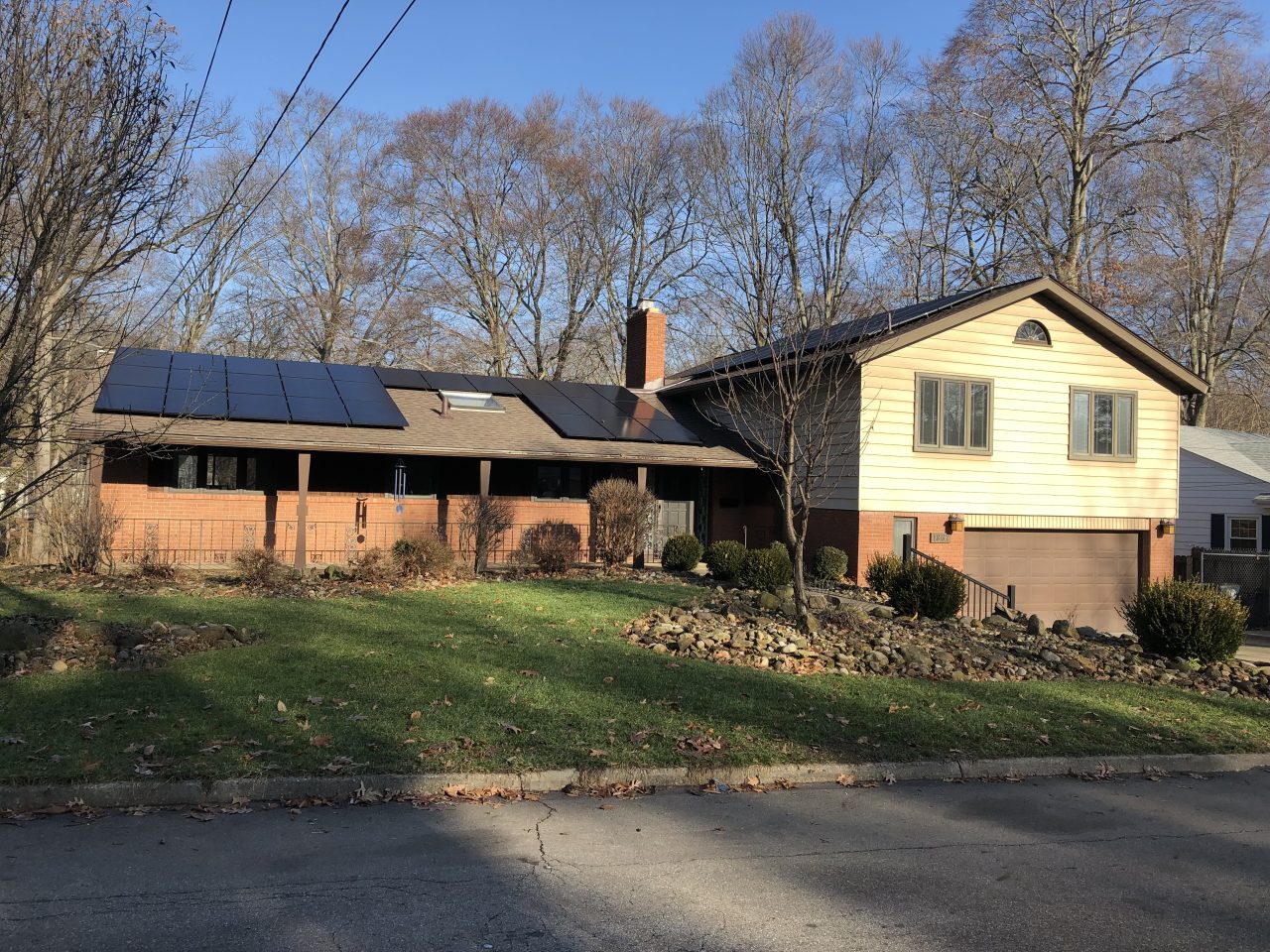
Bowie converted her home to 100% electric back in 2018. Since most of the equipment and appliances needed to be replaced anyway, Hallie saw this as a perfect opportunity. Bowie installed an air-source heat pump instead of a gas furnace, a heat pump water heater instead of a gas water heater, and an induction cooktop instead of a gas or traditional electric cooktop. Bowie also has an electric vehicle charging station in her garage and solar panels on her roof. While Bowie made these changes before the Inflation Reduction Act was in effect, most of these are included in Inflation Reduction Act incentives.
“Most households will be looking at doing these sorts of changes over a period of time, but it’s important that people…have a plan,” says Bowie. “So when their furnace or their water heater ages out…they know that they want to do something a little different than what was there before.”
Bowie suggests that homeowners plan ahead for big appliance and equipment replacement, so that they aren’t caught of guard when replacement time comes:
“Rather than being in…an emergency situation in January when the furnace goes out, and you just say ‘yes’ when the installation [technician] comes and says, ‘You want me put in the same thing, or maybe this one that’s just a little bit more efficient, that’s still a gas system similar to what you had?’”
This open house could also appeal to people who are building new homes or purchasing homes that do not have appliances included. Those who pay taxes will receive a tax credit, and those who cannot use the tax credit are eligible to receive rebates at the point of purchase. Bowie says she believes this rebate program is still being rolled out, but that the rules will differ from state to state.
The afternoon presentation to SoSA could be useful information for businesses that have potential to upgrade their systems. Getting familiar with electric heat pumps and other equipment could translate to commercial use.
“Everybody who’s a decision maker really needs to be starting to think about moving away from fossil fuel use everywhere,” says Bowie. “And so this is just one example of how to do that.”
Bowie explains how a large manufacturing campus could look at different options for sustainable upgrades: “For instance, that might be a good use for a ground source heat pump, where it makes sense to invest in the cost of drilling the wells for the ground source loops, but it’s still the same technology where the heat pump is moving heat instead of generating it.”
At New Leaf Home Design, Bowie works to include appropriate decisions on all of her projects.
“I do a lot of home additions and renovations, and to a large extent, continuing to use an existing building is the most sustainable kind of project, as opposed to building new,” says Bowie. “When I’m looking at a project, I always talk about opportunities for doing better air-sealing of the house and adding insulation, and then opportunities for moving towards electrification.”
For instance, Bowie says that if you’re going to have an electrician on site, you definitely want to be thinking about adding an electric car charger to the garage, even if you don’t have the vehicle yet. If the furnace is going to need to be replaced, evaluate whether the house is a good candidate for heat pump conversion. However, Bowie says that not every home is a good candidate for 100% electric heating. Older homes built before the 1940s or homes that have a finished second or third floor with sloped ceilings would be more challenging to convert, as these homes have less insulation than other homes. They could still benefit from a hybrid system, keeping the gas furnace but replacing the air conditioner with a heat pump.
“My house has a backup resistance electric heat for when the heat pump is not sized to deal with the very coldest temperatures,” says Bowie. “So, there’s just an inexpensive toaster coil in the bottom of the unit, but if you spend too much time using that toaster coil, then you’re not going to be happy with your utility bills.”
We asked Bowie about her perspective on the current state of green building in Akron.
“When we talk about green building, that kind of sequesters it into a special little niche,” says Bowie. “Now, there is space for homes that are really going above and beyond and really trying to be sustainable in a seventh generation kind of way, where we could continue building in that way for hundreds of years and not be doing harm to the planet. However, at the moment, our primary concern is combating climate change, and for that, we’ve got a matter of decades.”
Bowie says that every building project needs to focus on moving away from fossil fuels. This can include simple protocols like specifying electric water heaters, adding more insulation, sealing up rim joists in the basement and ensuring there are no leaky spots upstairs that will create a chimney-like effect, where warm air is pulled out through the gaps.
Most of Bowie’s clients approach her because she’s a specialist in residential additions and renovations, and she is usually the one to suggest these energy-saving features. She says while some renovation clients are somewhat interested in energy efficiency, new home clients are more likely to be seeking green building techniques.
“Most clients that I’ve run across are not particularly interested in actually getting LEED certification or Passive House certification,” says Bowie. “They don’t have real specific goals of what they have in mind for being green, other than maybe having solar panels…Everybody knows about solar panels, whereas a lot of the things that go into making an efficient house are just really not all that exciting. It’s about caulk.”
While Bowie says that in recent years she has seen a small increase in clients asking for energy-efficiency in their homes, we have a long way to go.
“Compared to…New England, Massachusetts…it really feels like we’re in the Dark Ages here in Ohio,” says Bowie. “That said, there are some exciting things going on.”
Bowie mentioned Cleveland’s tax abatement incentive tied to green certifications, as well as a similar program in Cincinnati. She hopes to help more local homeowners find ways to utilize the Inflation Reduction Act when working towards greater energy efficiency.
“It seems like people have a very good understanding that this thing passed, but they don’t know exactly what it means for them, and how it needs to be impacting decisions that they make,” Bowie says.
Bowie also had some ideas for how to get more people interested in greening their homes.
“I think it would be great if there were more coaches out there to go through a home with somebody and help them see what the opportunities are, and to kind of create a five to ten-year game plan,” says Bowie.
For instance, for furnace replacements, you need to know how old your furnace is, and when it’s going to be reaching the end of its lifespan, so that you can be ready and take the time to make the transition and to get the electrical work done. Similarly, a coach could help someone figure out whether their house has good orientation and a nice surface that would support solar panels, as well as whether their shingles have enough lifespan left to justify installing solar panels.
“You don’t want to be putting solar panels onto shingles that are…three quarters of the way through their lifespan,” says Bowie. “But if you know that you’re going…to be replacing the shingles, then you can start planning… ahead and do solar panels fairly soon after that.”
Bowie finds that people will often install energy-efficient items without knowing that these purchases qualify for a tax credit, so raising awareness about these programs is important.
For more information on converting your home to electric, visit rewiringamerica.org.
Please RSVP if interested in attending an open house at 1867 Brookshire Road, Akron, Ohio.
Click below to RSVP: