
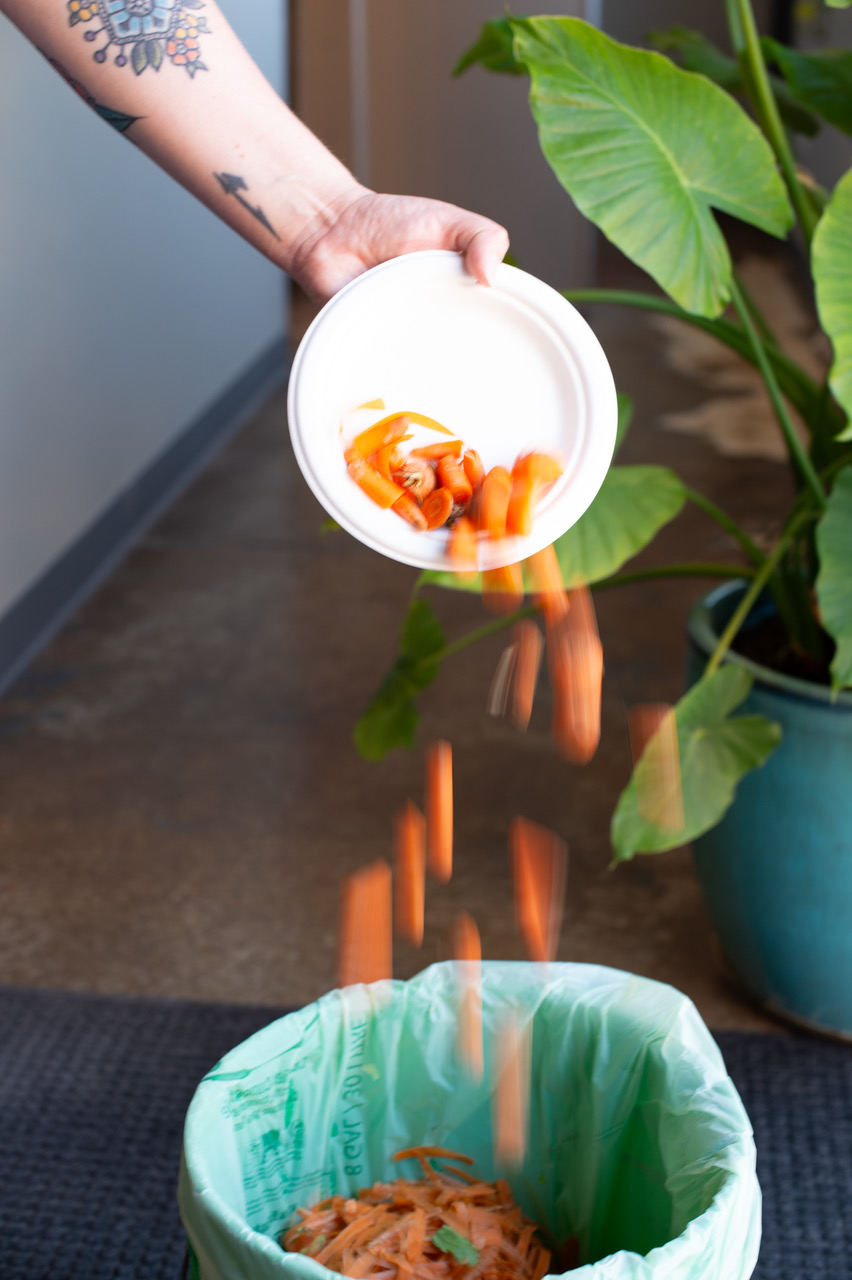
Part 1: SoSA’s Zero Waste Team is Building a Network to Simplify and Encourage Responsible Consumption and Production
Words by Sophie Vaughan
The apple core you threw in the trash bin might seem pretty benign compared to a block of styrofoam. You know that TV packaging could take 500 years to biodegrade —- but even food waste is detrimental to our environment. According to the EPA, in 2019 alone, the commercial, institutional, and residential sectors generated over 66 million tons of food waste, with just under 5% percent managed via composting. Approximately 60% of this food waste was sent to landfills, where it takes up space and releases harmful greenhouse gasses into the atmosphere. The EPA also estimates that food waste constitutes 24 percent of municipal solid waste, and that more food gets sent to landfills than any other single material in our everyday trash.
The Summit of Sustainability Alliance (SoSA) Zero Waste team is working diligently to spread awareness about waste reduction and to foster community collaboration toward a more environmentally sustainable Summit County region.

What is Zero Waste?
Before delving into SoSA’s Zero Waste endeavors, it is important to understand the concept of Zero Waste. At its core, Zero Waste focuses on waste prevention, encouraging the redesign of resource life cycles so that all products are reused, recycled, or composted, leaving no waste to be sent to landfills or incinerators. This holistic approach aims to change the way society views and manages waste, emphasizing sustainability and the responsible use of resources.
Aligned with these principles, the UN’s Responsible Consumption and Production Sustainable Development Goal (SDG) seeks to ensure sustainable consumption and production patterns. The goal is to separate economic growth from environmental harm, promoting efficient resource use and minimizing adverse impacts on the environment. The targets under this SDG encompass a broad spectrum, from the reduction of food waste to the sustainable management and efficient use of natural resources.
As we continue our coverage of SoSA, we spoke with SoSA Core Team Members Nathaniel Orndorf, Ph.D. and Rachel Madigan about SoSA’s Zero Waste efforts. Orndorf is Senior Material Scientist, Advanced/Sustainable Materials at Bridgestone Americas, Inc. Madigan works for the Department of Administration and Public Information at the Office of County Executive Ilene Shapiro. Orndorf and Madigan work with SoSA’s Zero Waste team to bring the UN’s Responsible Production and Consumption SDG to Summit County. We also spoke with SoSA Zero Waste team member Ben McMillan, Owner and Founder of Rubber City Reuse. McMillan’s company is a member of the US Composting Council and our local region’s leader in composting.
SoSA uses the Responsible Production and Consumption SDG as a guide for project development and sets goals that align with the Responsible Production and Consumption targets. The Zero Waste team is committed to dispelling the illusion that discarded items vanish without consequence.
“What we do with our waste is an important part of becoming more sustainable,” says Madigan. “While it might sound silly, one big piece of that is raising awareness that when you throw something away, it doesn’t just disappear.”
Madigan explains how creating less waste is a lot easier than it seems, and that the community can work together to promote alternatives to the default practice of throwing waste in the trash can.
Orndorf elaborates on this point:
“SoSA is creating a network of organizations to make waste reduction easier and more sustainable,” he says. “For example, if a non-profit and a neighboring company are both interested in sending their food scraps to compost, SoSA can help identify the best place to send the waste and assist in coordination of shared drop off/pickup that can save emissions and money.”
Orndorf says that SoSA has created a social network between local organizations sharing a similar vision for sustainability.
“Now we’re starting to create a physical network that will push us towards becoming a more sustainable community,” he says.
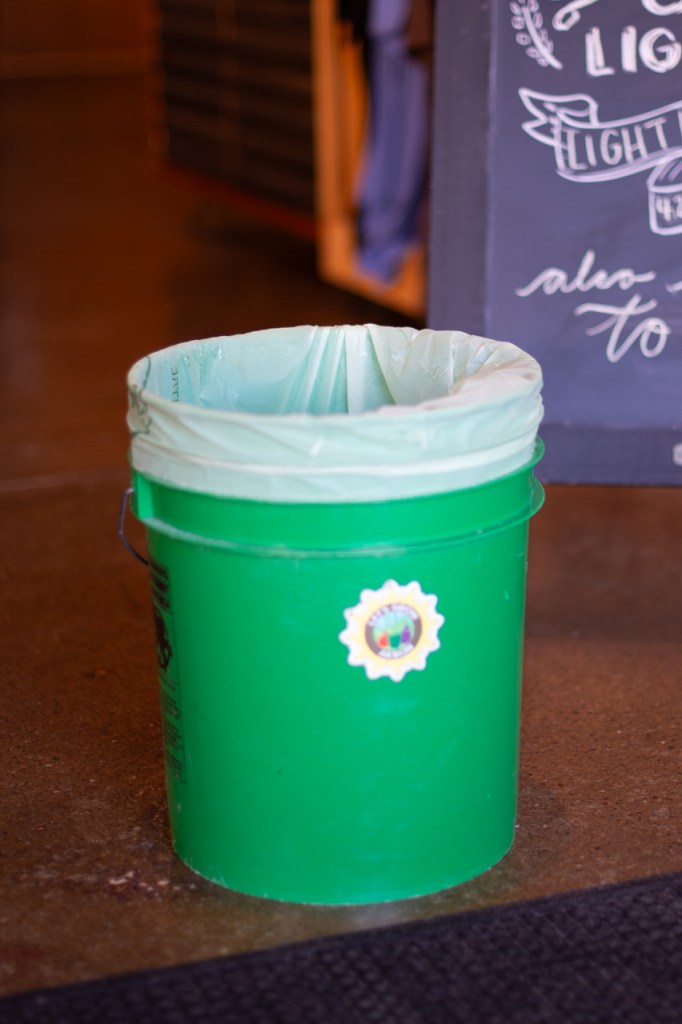
Making Composting Commonplace
The Zero Waste team’s current focus under the Responsible Consumption and Production SDG is on composting. They are collecting information on businesses and organizations around Summit County that are already composting. They are highlighting and celebrating this work so that other organizations can see how the practice of composting is becoming more common.
“Having this knowledge that people with similar operations to yours are composting can be compelling,” Madigan says. “From there, we want to help create a path for businesses and organizations that are interested in composting to do so more easily.”
One such business is HiHO Brewing Co., a locally owned and operated brewery, taproom and restaurant in Cuyahoga Falls. This locally owned and operated brewery, taproom and restaurant has been composting vegan food scraps with Let’s Grow Akron since early 2019. In early 2021, they officially implemented guidelines to begin composting unbleached paper products and compostable cutlery as well. Their spent grain does not get collected by Let’s Grow Akron, as it goes to a dairy farmer.
HiHO recently became a member of SoSA after SoSA hosted their April 2024 monthly membership meeting at HiHO. The April meeting featured Let’s Grow Akron’s composting program at HiHO, a tour of the brewery, and a Q&A on the brewery’s sustainable practices for heat, water and brewing. They also discussed sustainability pain points and hopeful plans for the future.
HiHO Operations/Community/Sustainability/QA Jamie Sipps says that the biggest challenge of implementing composting is education.
“Luckily, Let’s Grow Akron was very accommodating with any questions we had and patient as we had the learning curve of what could and could not go into compost,” says Sipps. “We had to understand any limitations they had and adjust to make sure we weren’t including anything that could hinder their process or attract pests.”
Sipps says that once they made composting available for customers as well, there were some challenges ensuring that customers were putting the correct items in the compost. Sipps says that signage has been helpful for that.
“The best part about composting as a business is diverting waste out of landfills and the great, mutually beneficial relationship we have created with Let’s Grow Akron,” says Sipps. “Last year, we were able to divert 3,755 lbs of waste out of landfills that went to composting with Let’s Grow Akron.”
Sipps says that this relationship supports Let’s Grow Akron’s mission and the local economy and has also improved HiHO’s access to locally grown, seasonally appropriate produce that they use for some of their pizza specials.
As part SoSA’s data collection process, they have created a survey for organizations in the Summit County region regarding current composting practices, barriers to composting, and interest in developing organization-wide composting programs.
Orndorf provides more context, explaining how SoSA connects organizations and businesses with resources to compost. These resources enable them to either compost themselves or find the best suited partner organization for combining compost efforts.
“In the future, I see SoSA aiming to track the percentage of different types of material waste that is recycled/composted for each member organization, and SoSA as a whole, so that we have a quantifiable status and target,” says Orndorf.
Madigan says that because SoSA is currently in the data collection phase, they do not yet have a clear picture of the current state of Zero Waste in the region. This uncertainty makes it challenging to set goals at this stage.
“Since we’re focusing mainly on the role of composting organic materials, it is hard to say what the region’s overarching goals should be,” she says. “For our purposes, I think the measure of our progress is more people, businesses, and organizations adopting composting practices into their routines.”
Read More in Part 2